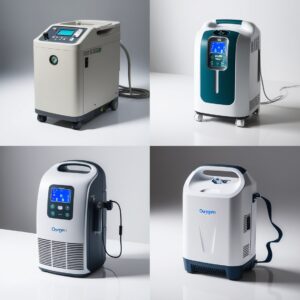
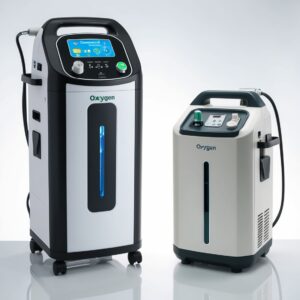
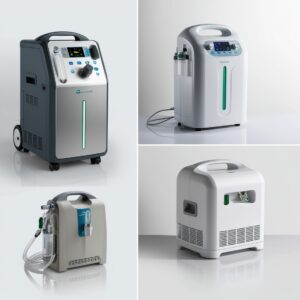
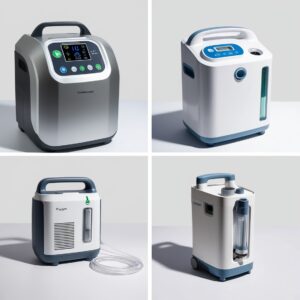
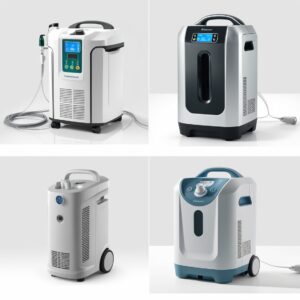
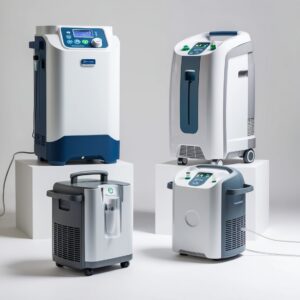
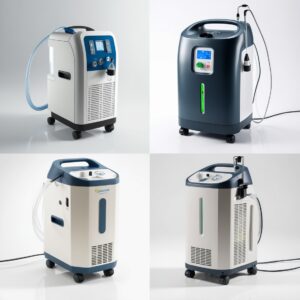
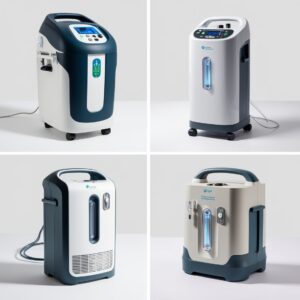
Oxygen concentrators are crucial for improving the quality of life for patients who suffer from conditions affecting their ability to breathe or absorb oxygen effectively. The choice between different types depends on the patient’s condition, lifestyle needs, and oxygen requirements.
Oxygen concentrators are crucial for improving the quality of life for patients who suffer from conditions affecting their ability to breathe or absorb oxygen effectively. The choice between different types depends on the patient’s condition, lifestyle needs, and oxygen requirements.
Benefits: They provide continuous oxygen flow, typically between 1 and 10 liters per minute (LPM). They are designed for long-term use but are not portable due to their size and weight.
Benefits: They provide continuous oxygen flow, typically between 1 and 10 liters per minute (LPM). They are designed for long-term use but are not portable due to their size and weight.
Benefits: They provide continuous oxygen flow, typically between 1 and 10 liters per minute (LPM). They are designed for long-term use but are not portable due to their size and weight.
Benefits: These devices provide both oxygen therapy and the benefits of continuous positive airway pressure (CPAP) or bilevel positive airway pressure (BiPAP), making them versatile for nighttime and respiratory care.
Benefits: These devices provide both oxygen therapy and the benefits of continuous positive airway pressure (CPAP) or bilevel positive airway pressure (BiPAP), making them versatile for nighttime and respiratory care.
Benefits: These devices provide both oxygen therapy and the benefits of continuous positive airway pressure (CPAP) or bilevel positive airway pressure (BiPAP), making them versatile for nighttime and respiratory care.
Uses: These provide a constant flow of oxygen, regardless of whether the user is inhaling or exhaling. They are mostly found in stationary models and are beneficial for patients who require higher oxygen levels or a steady supply.
Uses: These provide a constant flow of oxygen, regardless of whether the user is inhaling or exhaling. They are mostly found in stationary models and are beneficial for patients who require higher oxygen levels or a steady supply.
Uses: These provide a constant flow of oxygen, regardless of whether the user is inhaling or exhaling. They are mostly found in stationary models and are beneficial for patients who require higher oxygen levels or a steady supply.
Benefits: These devices provide both oxygen therapy and the benefits of continuous positive airway pressure (CPAP) or bilevel positive airway pressure (BiPAP), making them versatile for nighttime and respiratory care.
Benefits: These devices provide both oxygen therapy and the benefits of continuous positive airway pressure (CPAP) or bilevel positive airway pressure (BiPAP), making them versatile for nighttime and respiratory care.
Uses: These devices are used for patients with severe respiratory conditions who need a higher flow rate of oxygen (typically over 10 LPM). They are generally hospital-grade machines but can be found in some home settings for patients with advanced diseases.
Uses: These devices are Medical for patients with severe respiratory conditions who need a higher flow rate of oxygen (typically over 10 LPM). They are generally hospital-grade machines but can be found in some home settings for patients with advanced diseases.
Uses: These devices are Medical for patients with severe respiratory conditions who need a higher flow rate of oxygen (typically over 10 LPM). They are generally hospital-grade machines but can be found in some home settings for patients with advanced diseases.
COPD: Oxygen concentrators are vital for managing low blood oxygen levels in COPD patients, particularly to reduce shortness of breath and improve quality of life.
COPD: Oxygen concentrators are vital for managing low blood oxygen levels in COPD patients, particularly to reduce shortness of breath and improve quality of life.
COPD: Oxygen concentrators are vital for managing low blood oxygen levels in COPD patients, particularly to reduce shortness of breath and improve quality of life.